During my trip in Japan, I had the opportunity to get a glimpse inside an anime-studio. Check out my impressions here!

As an anime-fan, there are basically only two ways to get a glimpse of what it’s like to work in an anime-studio: either at anime conventions, when studio representatives are there to promote their work, or through documentaries. Every now and then, there are also official behind-the-scenes reports, but these are usually limited to just brief snippets.
Especially for someone like me, who has already had the opportunity to visit a recording studio as part of my writing work and generally spends a lot of time learning about the people behind anime productions, it had long been a dream not just to see this from the outside, but to experience it firsthand. All that changed during my trip to Japan in May 2026.
(Not) an everyday opportunity
Wednesday, May 20, in Tokyo. Under the rising sun, and with the temperature already reaching a chilly 25 °C at 10:50 a.m., I entered, very nervous, along with my interpreter and translator Ekaterina Mikulich, an unspectacular office building.
Our destination was the third floor, home to the main lobby of the anime-studio ENGI, which was founded in 2018 as a joint venture between KADOKAWA, Sammy Corporation, and Ultra Super Pictures. Since its founding, ENGI has established itself through both commissioned work and original productions. These include, among others, Uzaki-chan Wants to Hang Out!, The Detective Is Already Dead, Gamera -Rebirth-, Unnamed Memory, and Medalist.
Currently (May 2026), two titles are airing in the anime lineup: Ghost Concert: Missing Songs, an original anime based on a mixed-media project, and the second season of the ONA series Odekake Kozame.
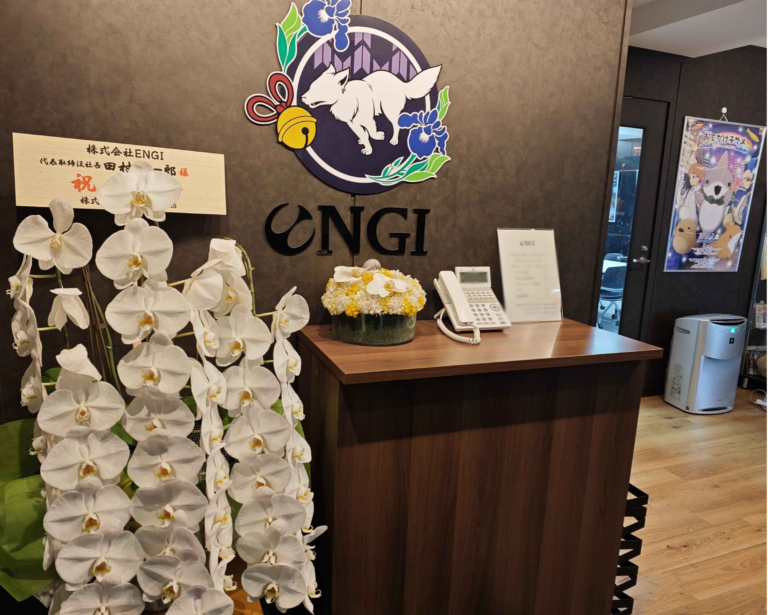
The Third Floor: The left heart chamber of ENGI
In addition to ENGI’s press spokesperson, we were also welcomed by Takayuki Tahata, the Digital Drawing Department Senior Manager.
After an interview with Yutaro Hoshino in a separate conference room and handing over a small gift on my part, the tour of the studio began immediately.
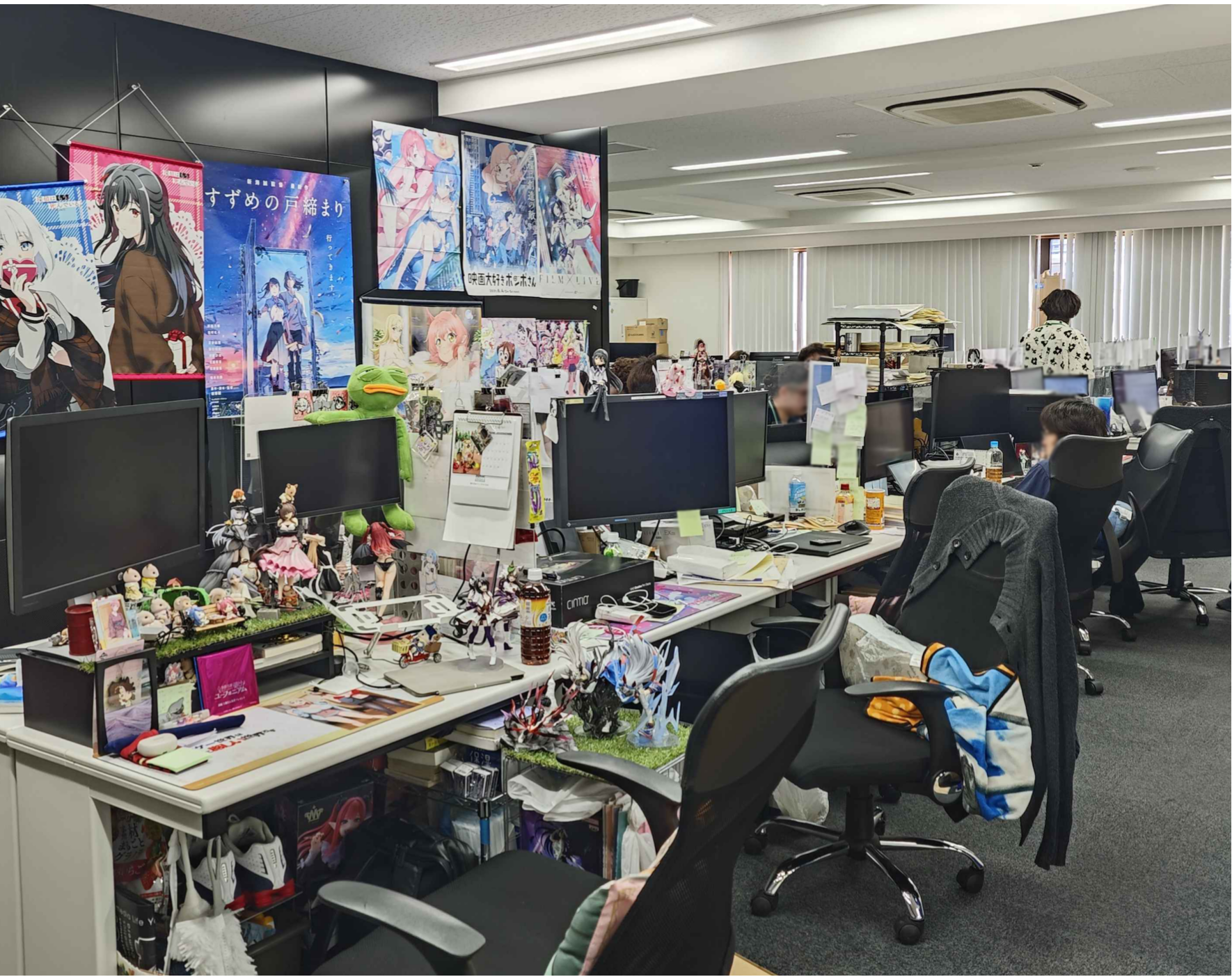
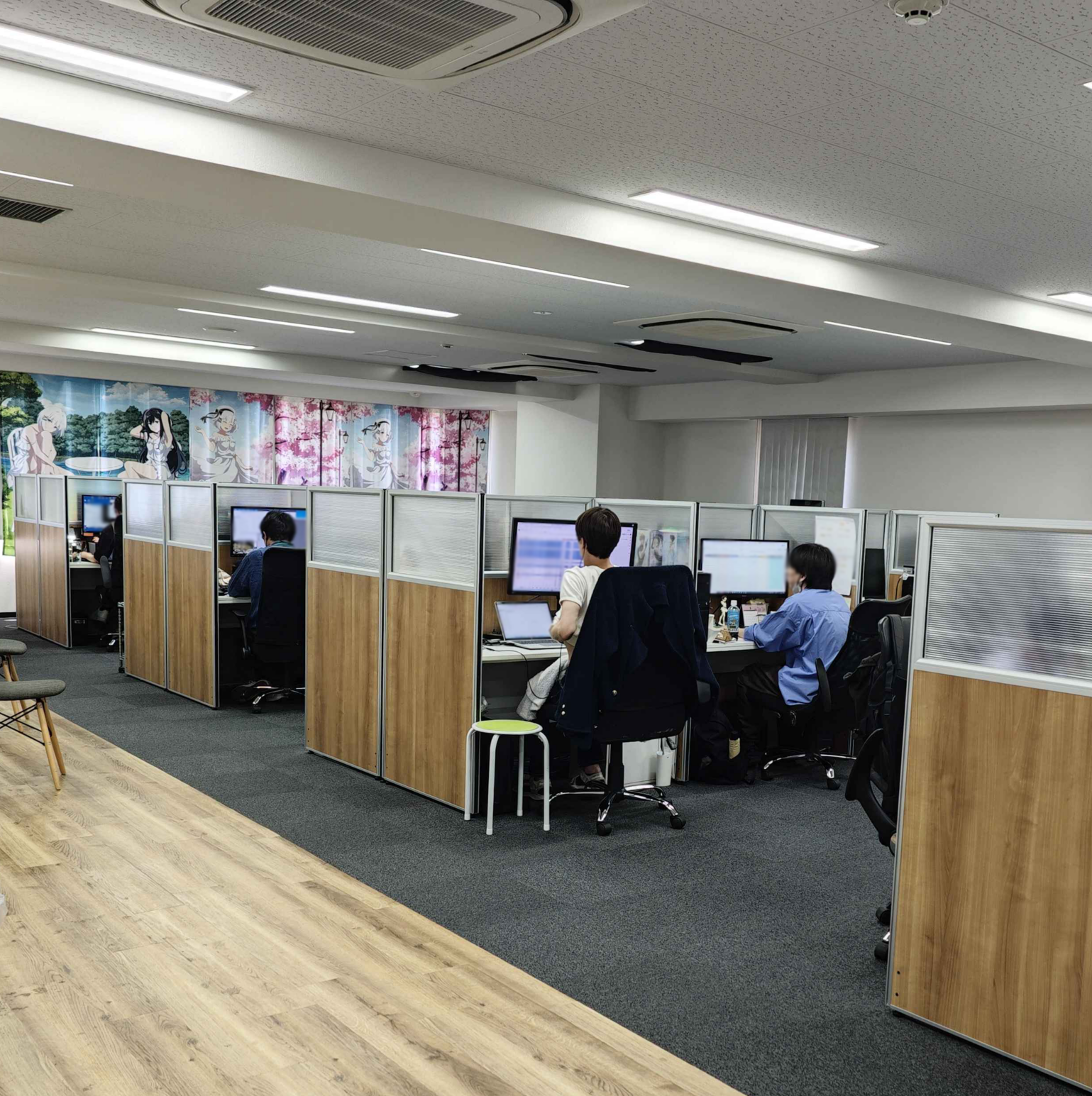
And yes: Anyone who has seen anime like Shirobako (highly recommended, if you haven’t) will recognize a lot. Not only the layout of the individual floors, but also the atmosphere itself is that of a classic office day: quiet, focused, with deliberately soft communication.
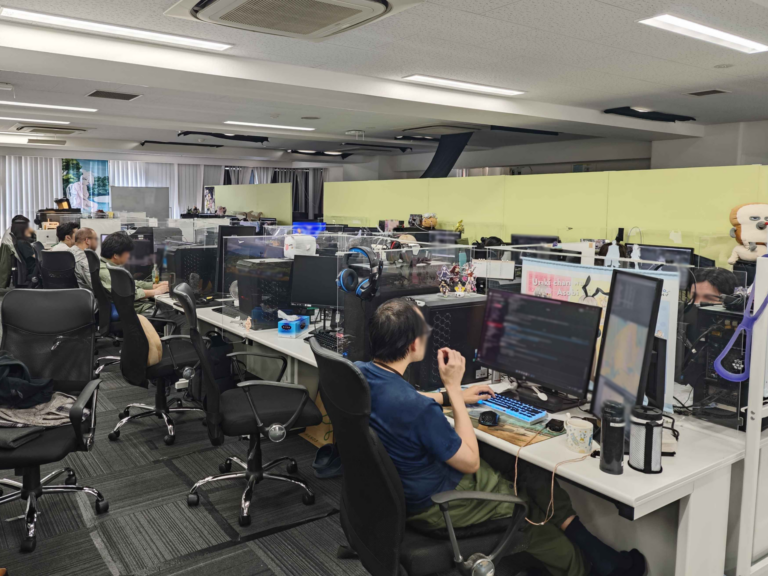
The third floor is divided into the production coordinators and animators, allowing many production steps to be carried out directly in the studio. Having the Production staff their own area nearby provides immediate feedback. It’s a clear separation that’s very reminiscent of a classic production pipeline, as seen in other documentaries or industry reports.
Takayuki Tahata explained that ENGI has fully transitioned to digital workflows since the COVID-19 pandemic. This saves time and paper, even though physical storyboards and cels still make an appearance in their daily work. It seems that even a digital production cannot function entirely without analog elements.
CLIP STUDIO PAINT is used throughout the studio for drawing. Although the software was originally intended primarily for illustrations, it has established itself as the standard in many studios, with all its pros and cons.
When asked about data storage, Tahata explained that all data is stored on local servers and is accessible only within the respective office. ENGI now has three locations: Tokyo, Sapporo, and Kurashiki.
External freelancers, in particular, are explicitly subject to such restrictions. They do not have direct access to the systems but continue to work via traditional methods using sent data copies. The primary goal here is protection against potential leaks.
Working conditions are another topic which was also addressed and is frequently discussed, particularly in the West. Regarding this, Tahata explained to me the difference between “black” and “white” companies, a term that has been in common use in Japan since the early 2000s.
“Black” companies refer to studios with a high-pressure “crunch” culture and intense deadlines. “White” companies, on the other hand, strive to maintain as healthy a work-life balance as possible.
According to the press spokesperson, ENGI clearly falls into the latter category. Working hours are Monday through Friday from 10:00 a.m. to 7:00 p.m., including breaks. Starting around 7:15 p.m., the computers are locked by the system. Working beyond these hours is only permitted in exceptional cases and with explicit approval.
Key cards are also active only on weekdays to prevent unmonitored work on weekends. This deliberately makes it more difficult to work after hours.
Everything needed is provided by the studio. Looking over an animator’s shoulder, for example, I noticed numerous macro keys – customized shortcuts that, according to Tahata, can be purchased on request to create optimal working conditions.
The Fifth Floor: The right heart chamber of ENGI
Tahata then had to get back to work, allowing us to take a quick look at the fifth floor.
Here, we see a different side of production: the CG department. Despite being a critical topic for many anime-fans, this is where the 3D models for series like Medalist are created, among other things. Creating illustrations for licensed characters is also done on the 5th floor.
Compared to the third floor, the much stronger technical focus is immediately apparent – larger computers, more processing power. At the same time, the floor is used in a more versatile way.
Alongside several conference rooms, there’s also a break area with a small kitchenette and a counter, which is specifically designed to encourage interaction between departments and coworkers.
A little less than 40 minutes later, our tour ended. Before leaving, the press spokesperson gave me some goodies from the current series Odekake Kozame, including a small coin purse that I enjoyed using for the rest of my vacation in Japan.
At this point, I would like to express my sincere thanks to everyone involved who made this visit possible. Getting to see an anime-studio in person is an experience that no documentary or anime about the industry can replace in this way.