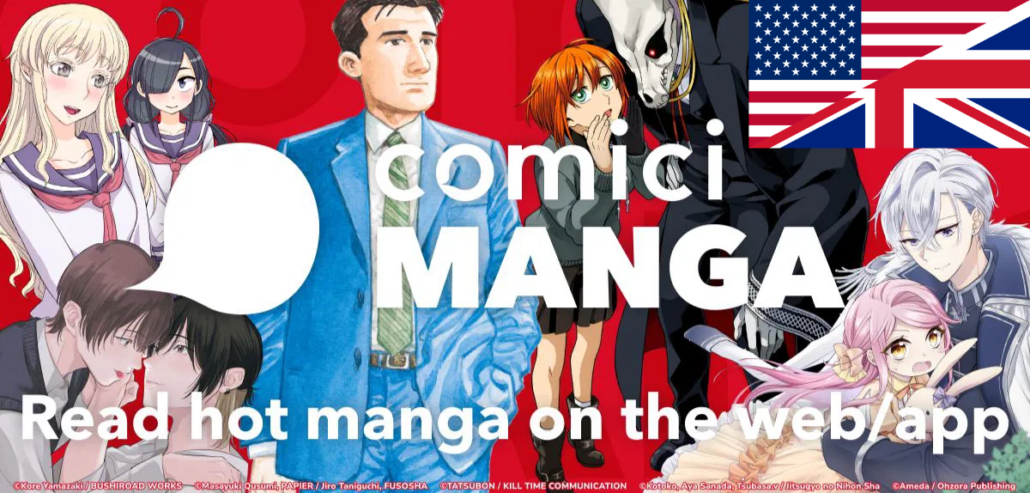
Reading manga digitally is becoming increasingly popular. This is largely due to the wide availability of legal manga apps. A new player in the market is comici MANGA, making its international debut in early March. I had the opportunity to ask the CEO, Daisaku Manda, a few questions about this.
First of all, thank you for taking the time for the interview! And congratulations on the (hopefully smooth) launch of comici MANGA!
Could you briefly introduce yourself to our audience? What is your role at comici, and what is your background in the manga industry?
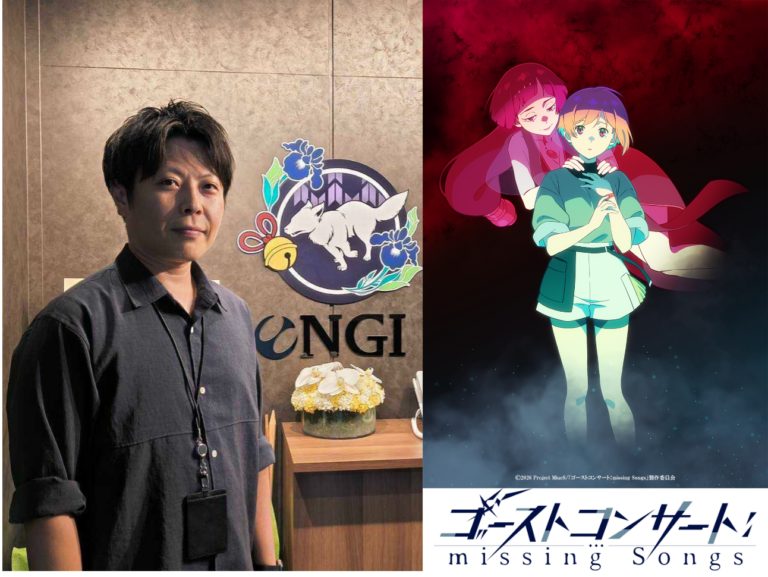
I’m Daisaku Manda, the founder and CEO of comici. I come from an engineering background, and I now focus on building infrastructure for the manga industry—working with publishers on distribution, data, and monetization.
I wasn’t originally part of the traditional manga industry. From the outside, I felt that while manga itself is globally strong, the infrastructure behind it is still fragmented.
That’s why I founded comici—to help connect creators, publishers, and readers through technology.
What was the key motivation behind launching comici MANGA for overseas audiences?
DM: The motivation is to help more people around the world discover manga as a form of entertainment. Today, many people first encounter Japanese culture through anime. Anime is a passive experience: You watch it.
Manga is different. It’s more diverse, and it requires active engagement from the reader. You control the pace, the interpretation, and the experience. Because of that, manga has a unique depth as an entertainment medium. But compared to anime, it is still less accessible globally.
So we launched comici MANGA to make manga more widely available and easier to experience around the world.
What are the platform’s main goals, both in the short term and long term?
DM: In the short term, our goal is to launch early, learn from real user behavior across regions, and iterate rapidly. We know the product is not perfect yet, but we believe speed of learning is more important at this stage.
In the long term, we aim to build a global ecosystem where creators, publishers, and readers are connected through a shared infrastructure.
How has the launch been so far, and what kind of early feedback have you received?
DM: The launch is still in an early phase, but we are seeing promising signals.
For example, we’ve already observed that subscription-based reading behavior can work internationally, not just one-time purchases.
At the same time, we are learning that each region behaves differently, so there is no single global strategy.
Many Japanese publishers limit their apps to North America. comici, however, launched in multiple regions, including Europe. What was the thinking behind this international strategy?
DM: Our approach has two main reasons.
First, we want more people around the world to discover manga. Limiting distribution to a single region would go against that goal.
Second, we want to understand which combinations of countries and genres work best. Reading behavior differs significantly by region, so it’s important to learn which patterns are most promising.
By launching in multiple regions, we can both expand access and build a more data-driven understanding of the global manga market.
What are the biggest challenges when bringing a Japanese manga service to overseas markets?
DM: The biggest challenges are not only language, but also:
- Cultural nuance
- Legal and payment systems
- Piracy and pricing expectations
Each of these differs by country, so building a global service requires flexibility rather than a one-size-fits-all approach.
Do you see differences in reading habits between Japanese and international audiences?
DM: There are differences, but also similarities.
Globally, readers are very open to discovering new content.
At the same time, we see strong engagement in certain genres—especially niche genres like BL—which travel well across cultures.
comici brings together multiple publishers in one app. What are the biggest challenges in making this kind of collaboration work?
DM: Bringing multiple publishers together is both the biggest challenge and the biggest value.
Each publisher has its own policies, workflows, and expectations.
Our role is to create a shared infrastructure that allows them to operate independently, while still benefiting from a unified platform.
With growing criticism around AI-translated manga and fans pointing out that one title in your line-up has an AI translation, does comici see a responsibility to ensure translation quality? Would you consider introducing guidelines or contractual clauses to limit the use of AI-only translations on the platform?
DM: We take translation quality very seriously.
AI can be useful as a tool, especially for speed and scalability, but we do not believe AI-only translation is sufficient for manga.
Manga relies heavily on nuance, tone, and cultural context. So human review and editing are essential.
We are continuously working on guidelines and processes to ensure quality while balancing speed and cost.
When looking through the catalog, the translation quality and presentation seem somewhat inconsistent. Some titles read quite smoothly, while others feel more stiff, and even the lettering varies. How do you approach quality control across different publishers?
DM: You are correct that there is currently some inconsistency.
This is because we are working with multiple publishers, each with different production pipelines.
Our approach is not to enforce a single rigid standard immediately, but to gradually improve quality through shared guidelines, feedback loops, and data.
Consistency will improve as the ecosystem matures.

I noticed that some titles on the platform are currently only available in Japanese, even though the app is presented as an English-language service and those titles already have English names. Are there plans to translate these works, or is this something users should expect going forward?
DM: Some parts of the content are translated, while others (such as cover images) are not always localized into English.
In many cases, this is based on the publisher’s intention, as cover design is closely tied to branding and original presentation.
That said, we recognize that this can create inconsistency for users, and we are working to improve the overall experience over time.
In Japan, comici is also known for comici+, your SaaS (Software as a Service) platform for digital manga distribution. Could you briefly explain how it works in simple terms?
DM: comici+ is a platform that helps publishers run their own digital manga services.
It covers everything from content management and distribution to analytics and marketing.
In simple terms, it allows publishers to focus on creating manga, while we support the technology and operations behind it.
Are there plans to expand this service internationally? For example, could overseas publishers like in Germany use comici+ to build their own platforms?
DM: Yes, we are considering expanding this internationally.
In the future, it would be possible for overseas publishers to use comici+ to build their own manga platforms, adapted to their local markets.
How do you see the global manga market evolving over the next few years?
DM: I believe the global manga market will continue to grow, but the key change will be structural.
Instead of a few dominant platforms, we will likely see a more connected ecosystem, where content flows across regions more freely.
What can users expect from comici in the near future?
DM: In the near future, users can expect:
- More titles
- Better translation quality
- Improved reading experience
- More region-specific optimization
We are still in a learning phase, and rapid iteration is our focus.
What are you currently reading?
DM: I read a wide range of manga.
Of course, I follow long-running series like One Piece and Kingdom, but I also make it a point to read across many magazines. In fact, I regularly go through all the titles in more than 30 manga magazines each month.
What I find most interesting is the moment of discovery—when a completely new work appears and surprises you.
That feeling is something I think is essential to manga, and it’s also something I want manga fans around the world to experience.
You’ve mentioned on your note that Kingdom is your favorite manga! Who is your favorite character, and why?
DM: Yes, Kingdom is one of my favorite manga.
My favorite character is Ei Sei (Ying Zheng), because he represents vision and long-term thinking.
He is trying to unify a fragmented world, which is something I can relate to in a different context.
Thank you very much for your time and for sharing these insights.
Download comici MANGA on the Apple App Store | Google Play Store